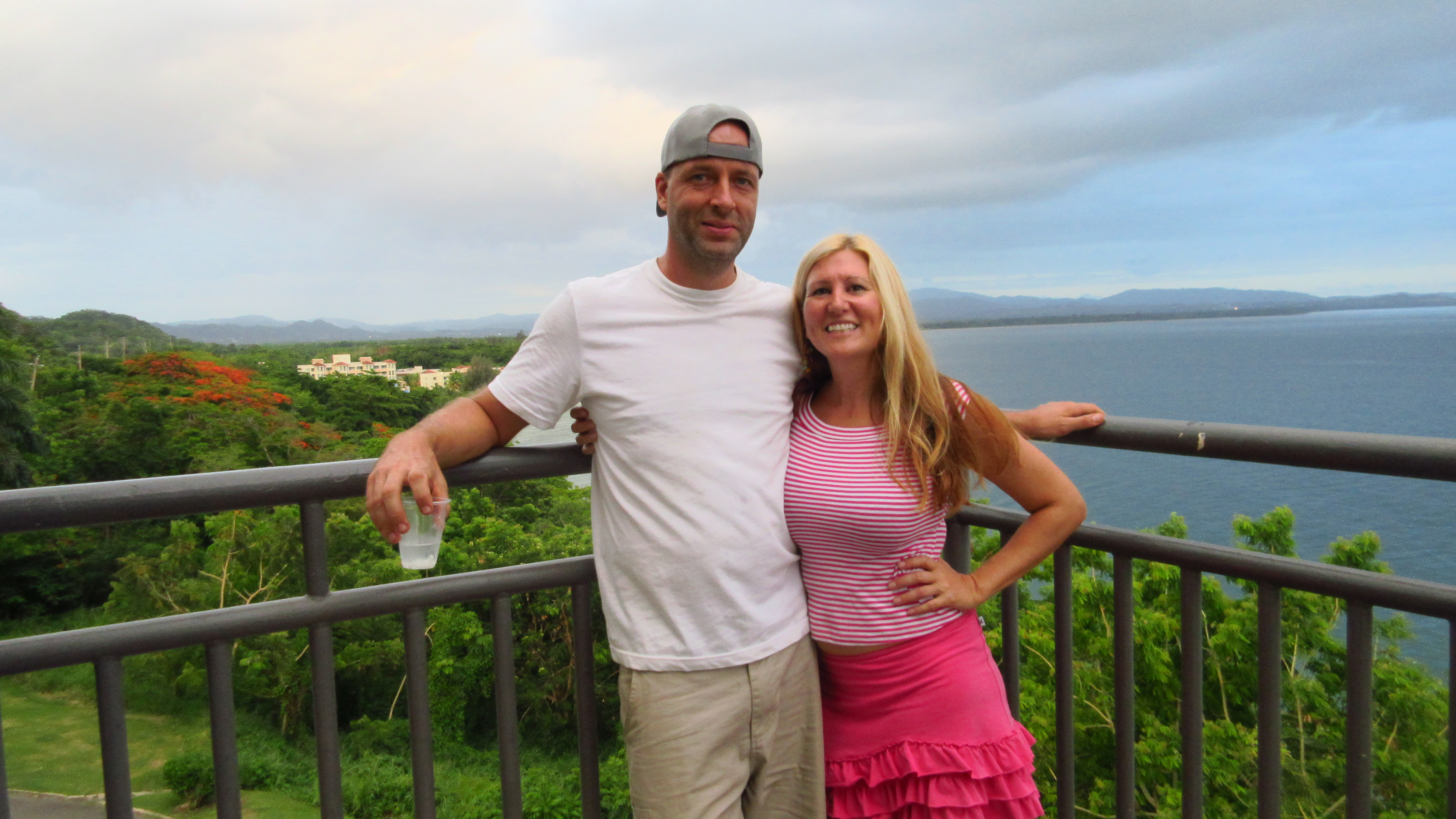
It is truly difficult to really capture how much of a change in lifestyle it is for someone who is not from Puerto Rico to move to Puerto Rico. It is different for everyone and some people (like children) will adapt faster than others. It also depends where exactly you move. Some people like condos and gated communities that are completely shut off from everyone else and their daily experience will be quite a bit different from people who live immersed within a neighborhood. People with kids will have a different experience than childfree people. But overall, here are a few ways your life will probably change if you move to Puerto Rico.
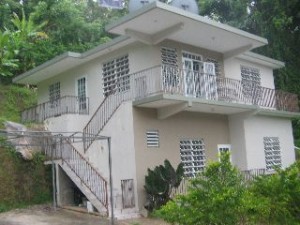
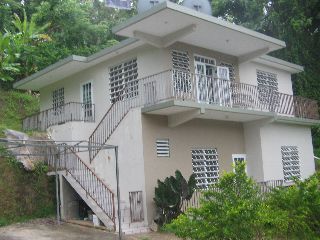
1) Housing – Whether you buy or rent you will more than likely live in a cement house with tile floors and louvered windows. Often on a road with virtually no setback or yard. It takes some time to get used to, but when you’ve been through a tropical storm you’ll understand why concrete became the standard (though on the otherhand not always the best in an earthquake) and after you’ve swept your floors for the 5th time that day you will understand why you wouldn’t want to have moldy dirty carpet anyway.
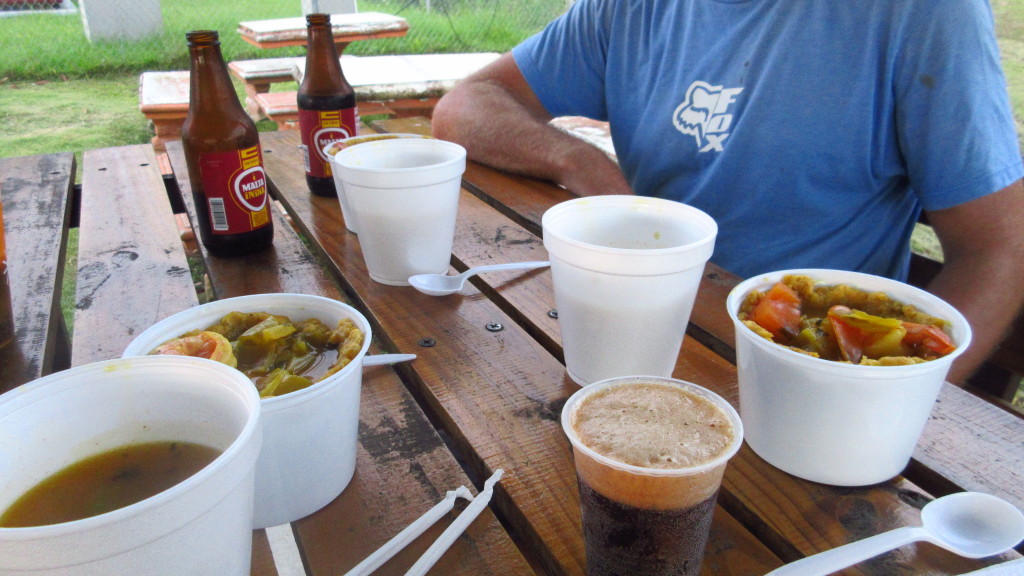
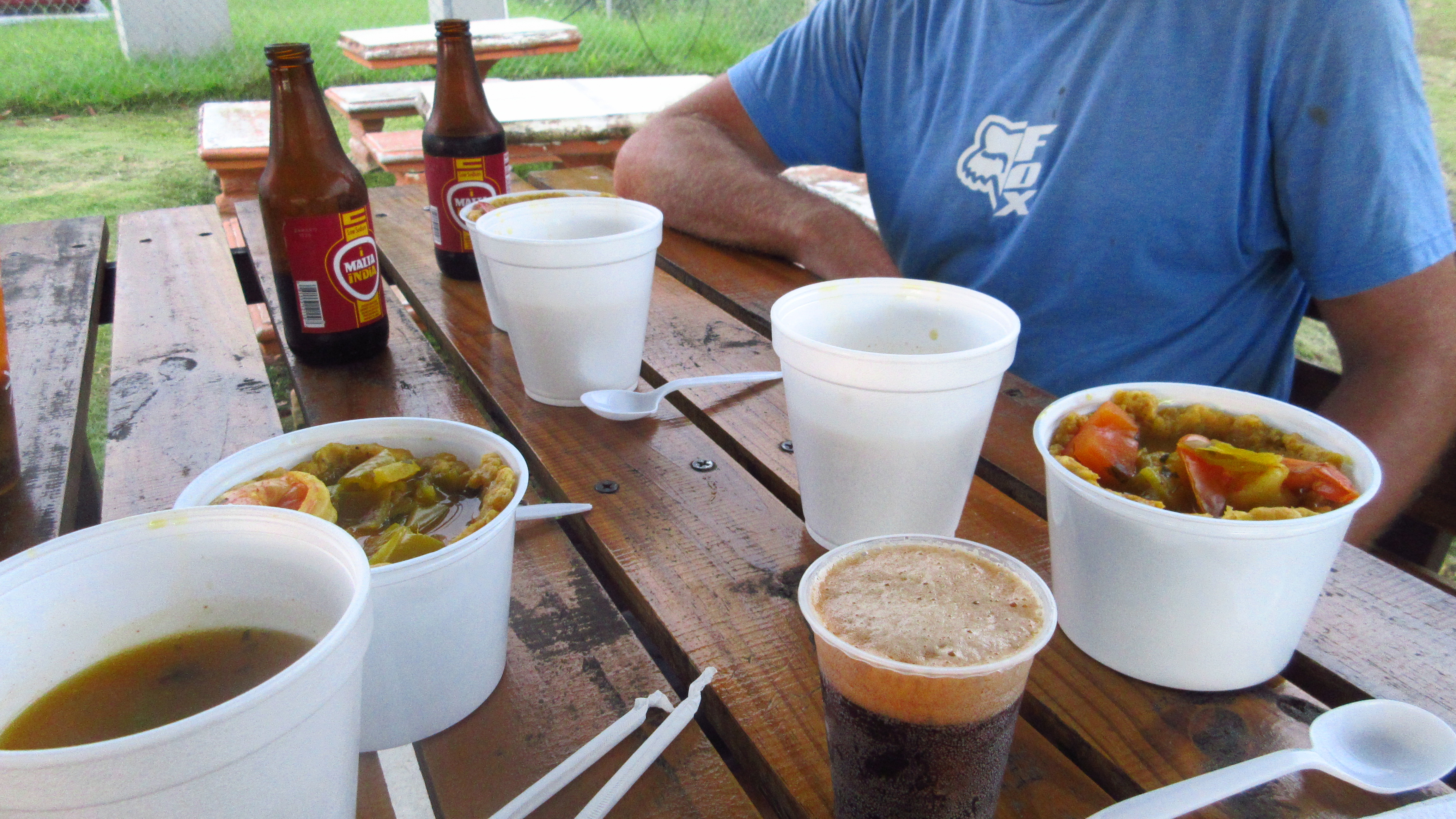
Mofongo and Malta at a roadside stop!
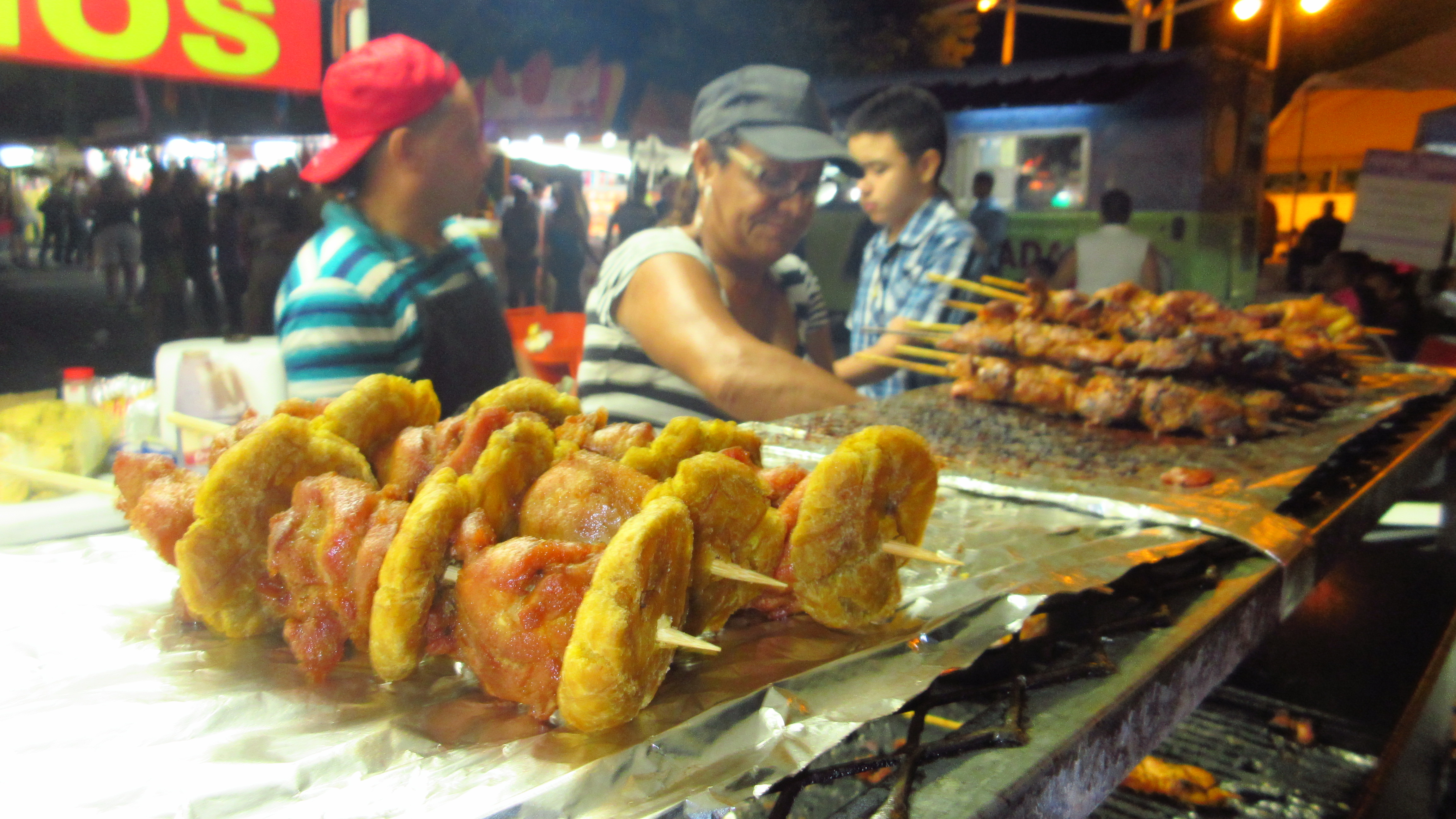
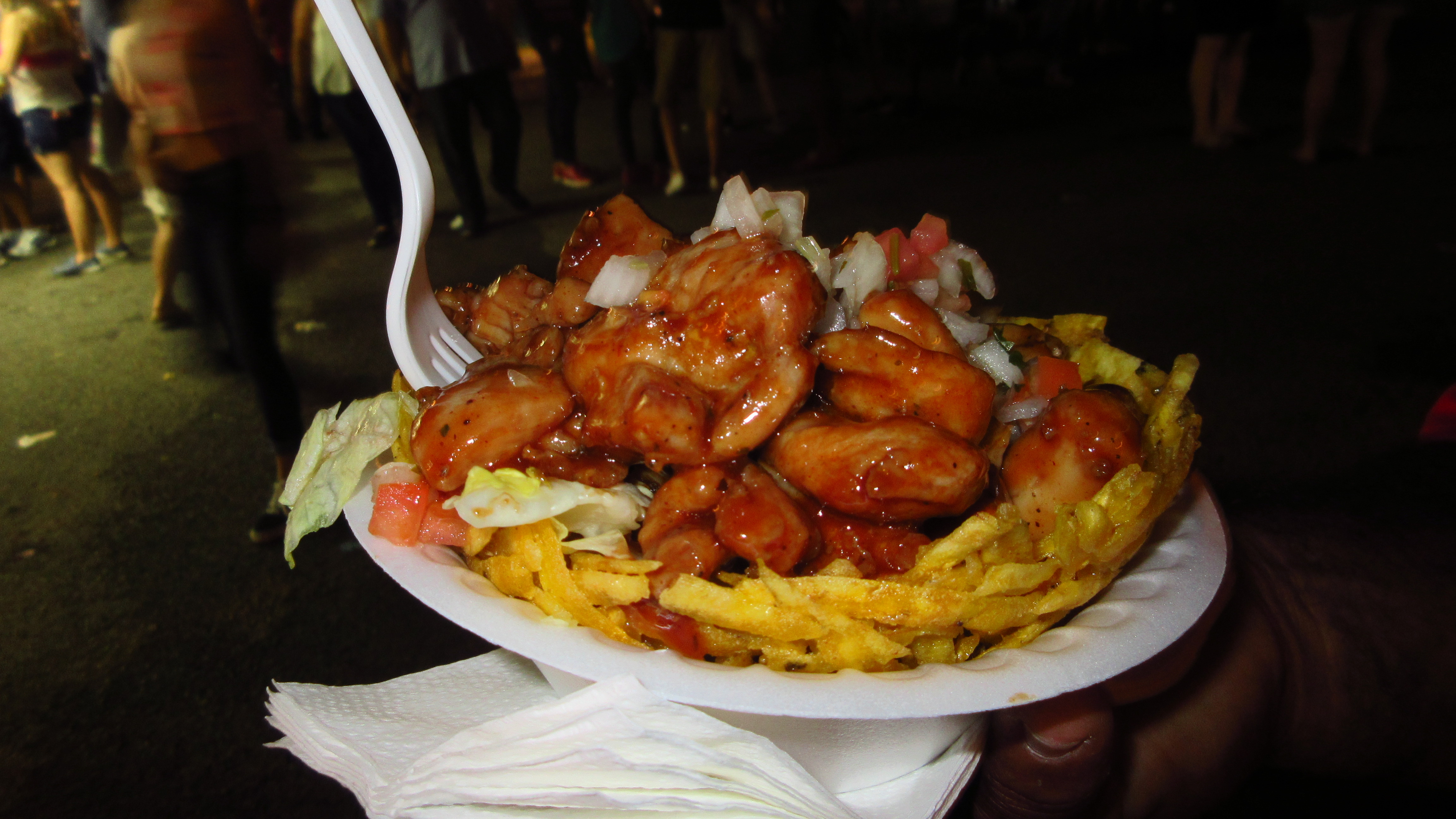
2) Food/Diet – No you won’t have the best apples, asparagus and artichokes. You may find them, but they won’t probably be very appetizing and are probably about a month old from their travels. Lettuces and other tender greens will be sparse in the grocery store. But the tradeoff is a wonderful cornucopia of tropical delights if you just look a little deeply and/or grow your own. While we can get those standard apples here, I’ve never seen a pomarrosa in a store in the states for instance! Also, don’t expect Puerto Rican food to be Mexican food. Puerto Rican cuisine is its own specialty. While I miss the spicy Mexican foods of Colorado, I LOVE many of the great foods of Puerto Rico like pasteles and mofongo.
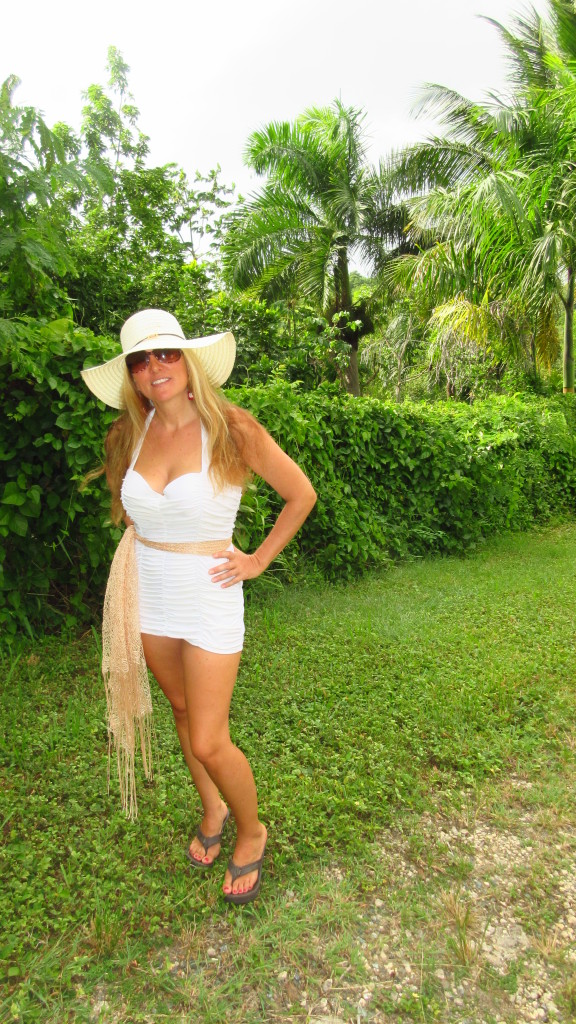
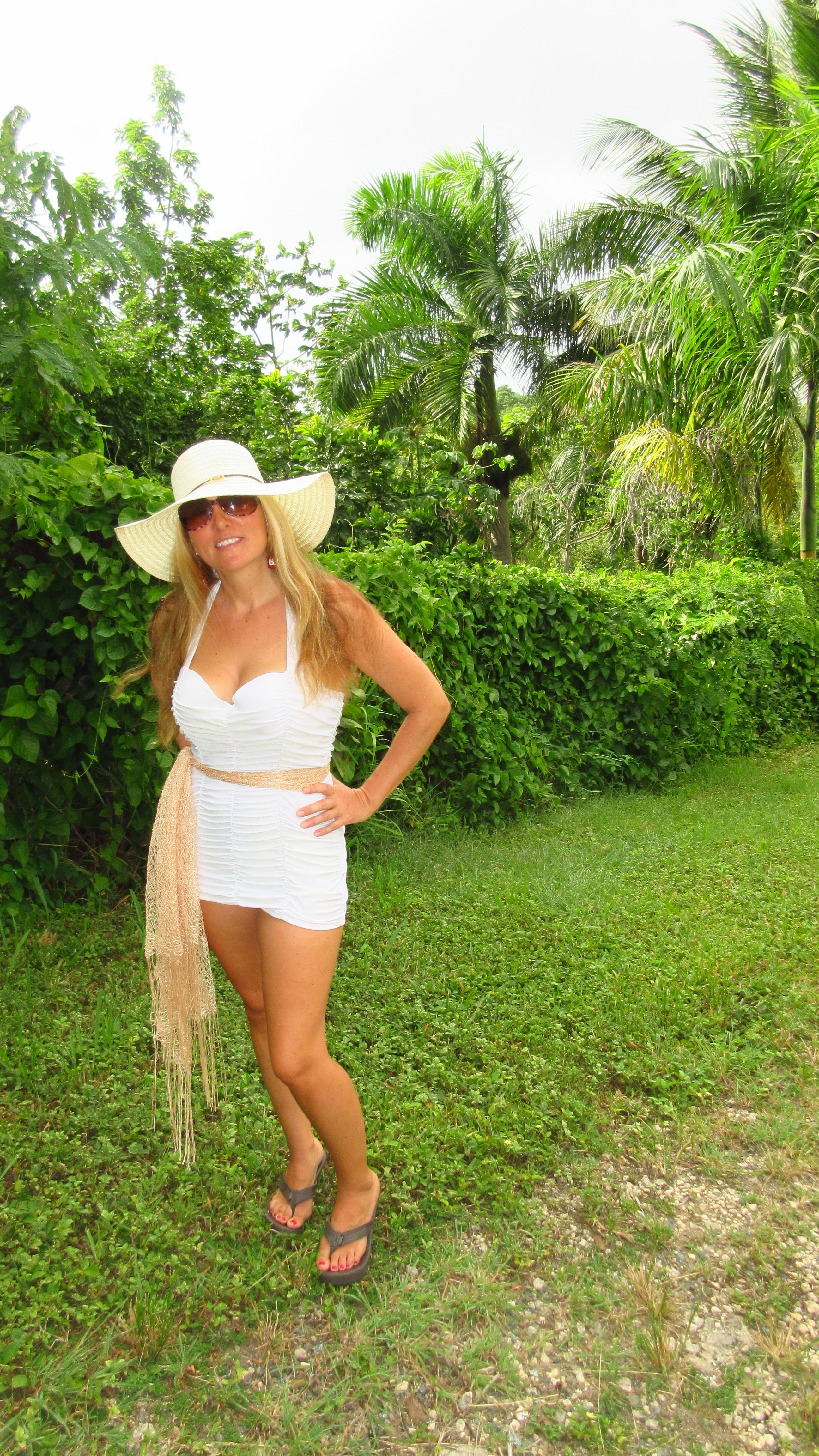
Warm weather to me means fun clothes!
3) Clothing -When it’s always nice outside, you won’t be needing that down padded snow coat or boots anymore…ever. Shorts and shirts or less. Most of the time I have a hard time putting on even that if we are staying at the property. However, one should always have a pair of pants and close-toed shoes on hand for the occasional visit to some governmental building or to go in a casino. Culturally most Puerto Ricans wear long pants. And must sweat like crazy. So if you don’t want to stick out like a gringo, you can wear pants. I still don’t usually though.
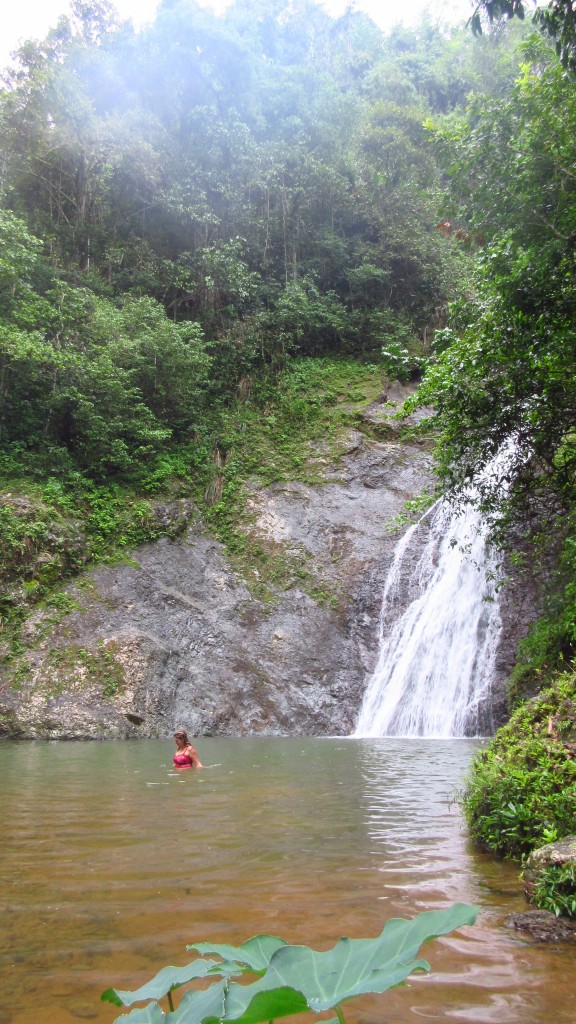
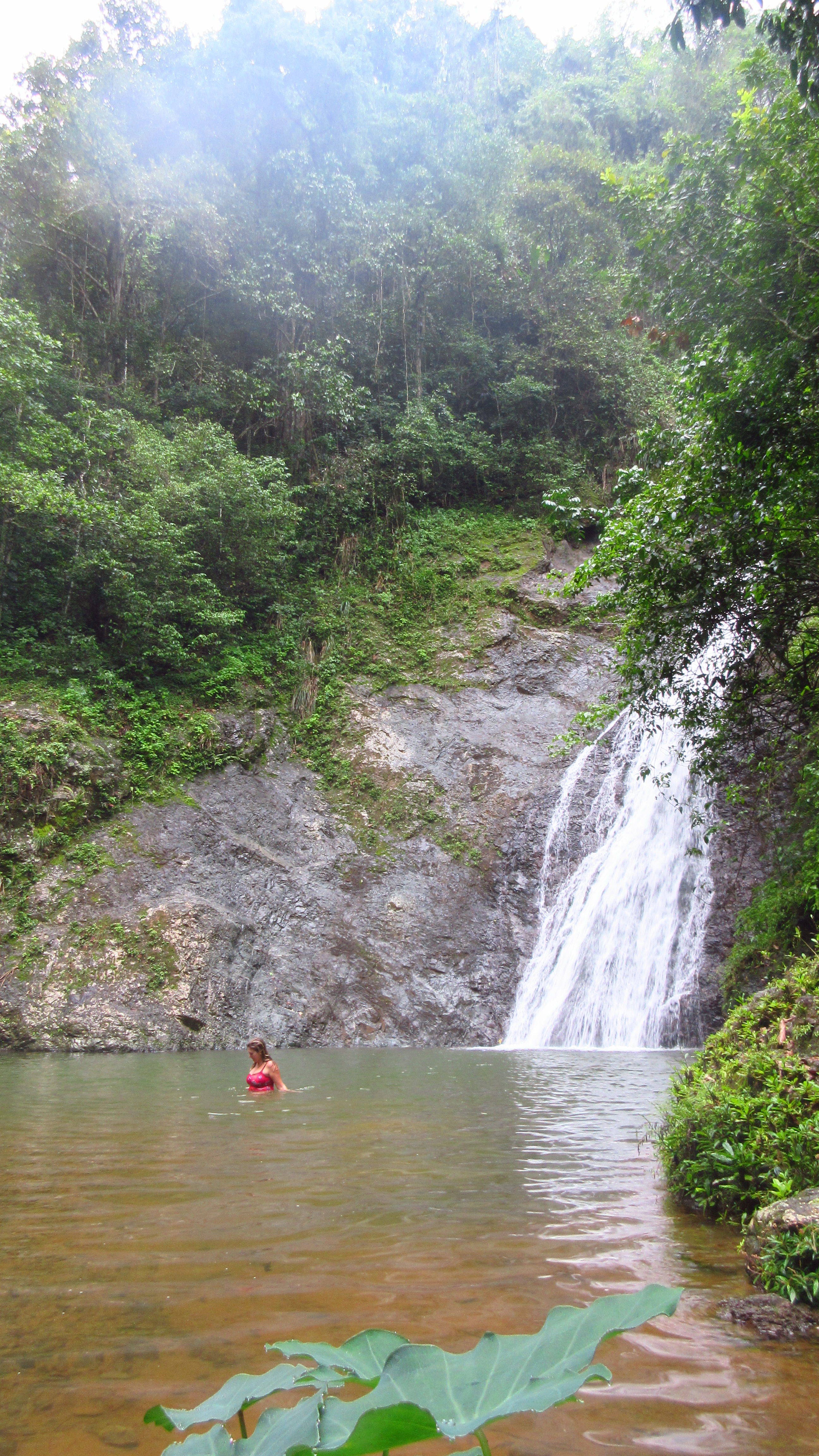
4) Activities – All year round summer means all year round summer-like activities. Especially if you live near the beach. Sure you can do most anything you did where you came from like go to the mall or a movie or whatever, but you will probably find yourself taking up some new hobby and activity. More than likely some creative venture. You also live on one of the most beautiful islands filled with all sorts of what you would probably consider exotic locations that you can explore anytime and pretty much without any pretense!
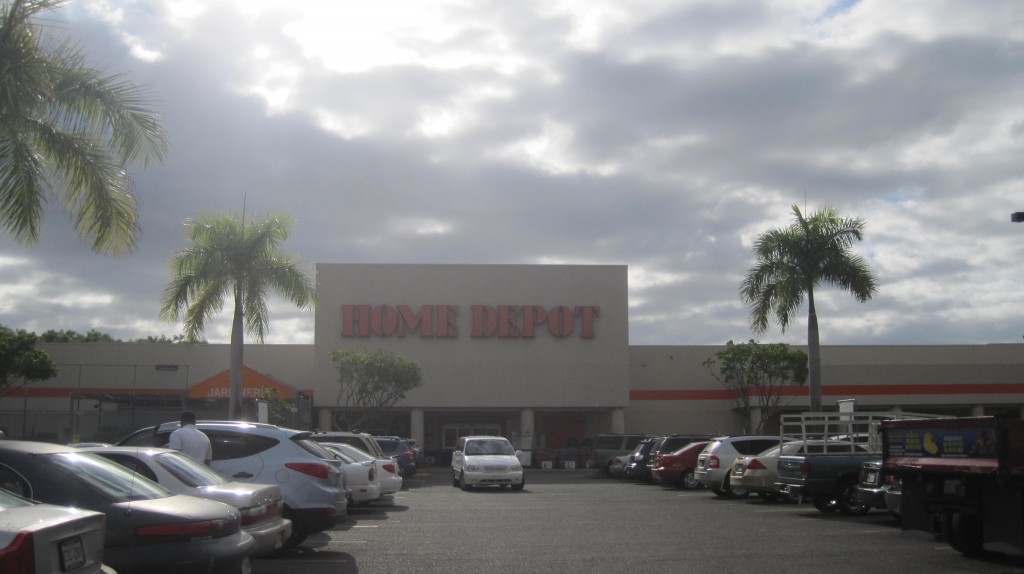
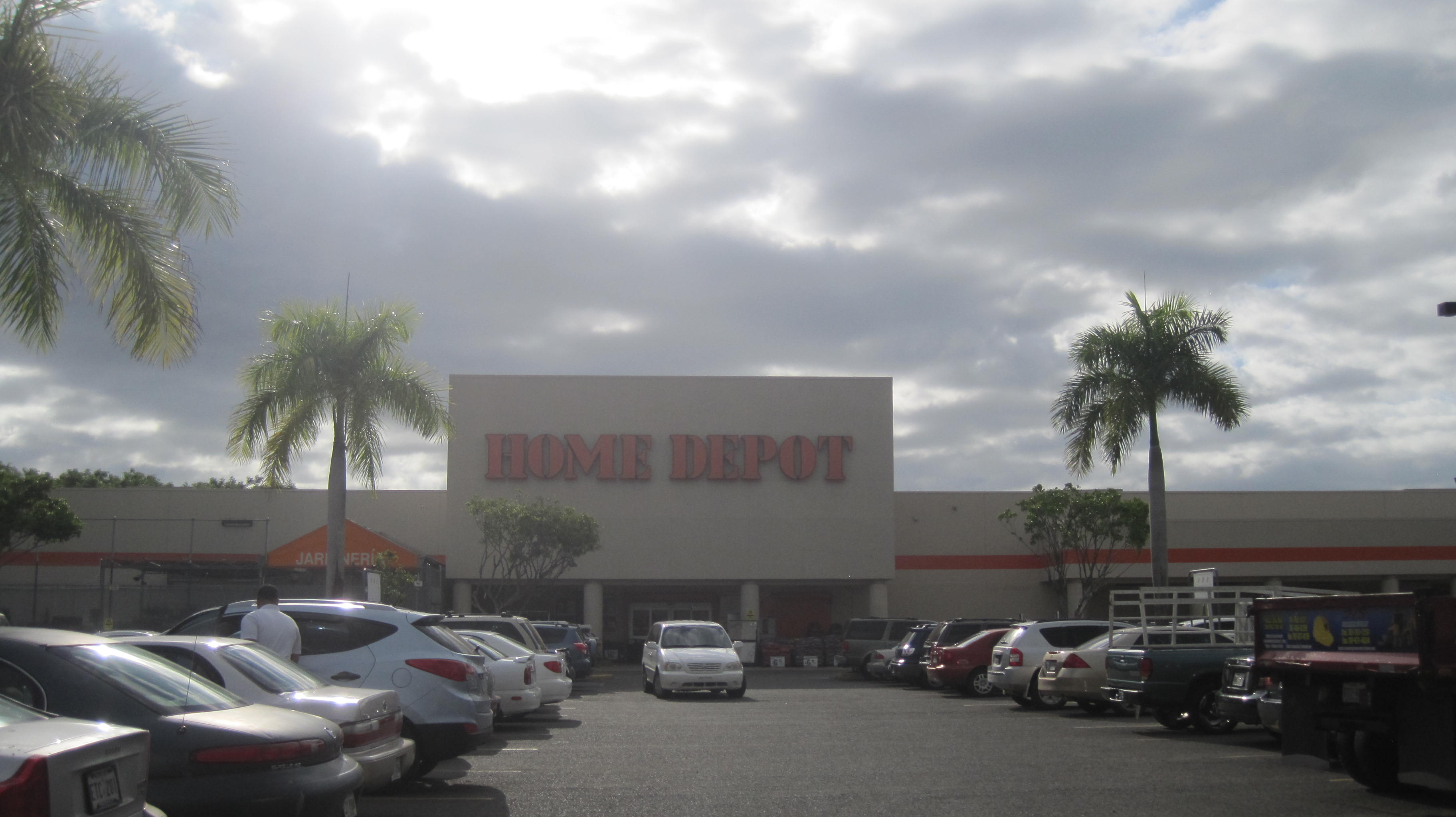
5) Shopping– Speaking of shopping….This is an island. Be prepared to get everything locally if possible. This is a who-you-know sort of place. You will need to be friendly with everyone because everything is connected. But if you do go shopping in the conventional way for example to some big box store like Sam’s or Marshall’s and you see something new that you may vaguely like and haven’t seen it before, you should probably buy it. More than likely you probably won’t see it there again or for a long while. And while you can buy a lot of things online, shipping is uncertain and sometimes pretty expensive.
6) Your abilities – You may have to do a lot more for yourself. And you will be surprised and amazed at the things you can do when you believe it. Heck, we are literally building a fricking house in the middle of jungle with very little outside help. You will grow and be stronger than you ever thought possible. But you have to be willing to give it a shot. You will learn about the can-do attitude of the people here. It may be done on Island Time, but if something gets set into motion, it gets done! You will probably learn a lot more home remedies and McGwyver type of fixes too. It helps to have 2 of everything just to have the parts!

There are “official” rules and then there are the “actual” rules of the road
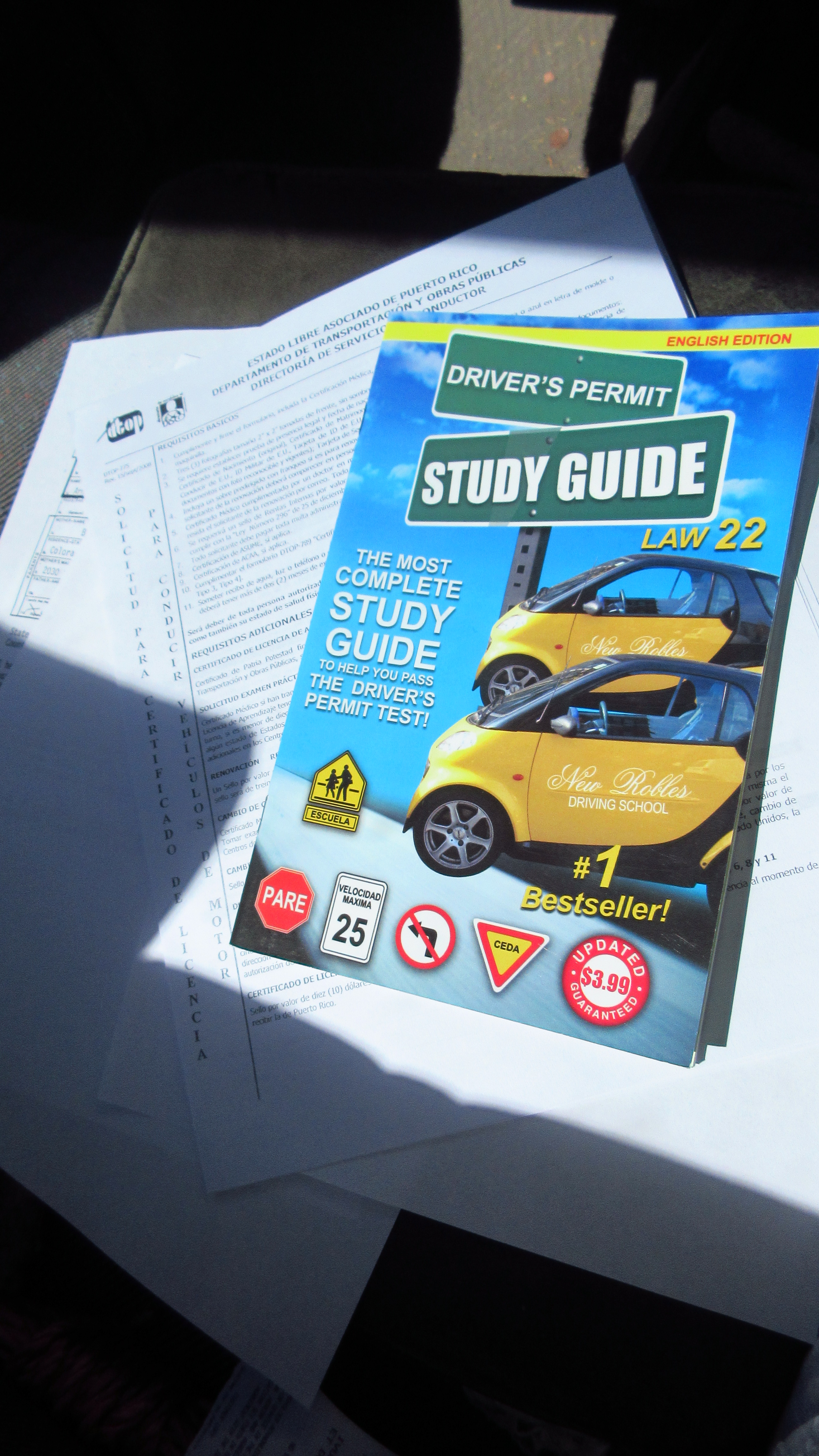
7) Driving – At first you will think the driving here is absolutely nuts. Oh, they just used that as a bonus lane!! Oh, they said hi to their neighbor with a bunch of traffic behind them, ínteresting. They totally dodged that pothole and headed straight into traffic. Did they just go right through the red light?! Wow, the cashiers sell and OPEN the beer for customers in the gas station? Oh, they are just going to stop right here and buy some quenepas and m+ms, oh and a whole pizza, at this intersection? Or there is someone who is turning and the car in front of you decides to stop wave them in front. Then one day you are in a position where that move might be helpful. So you try it out. And then you realize you are pretty much driving just like everyone else. And it’s awesome!
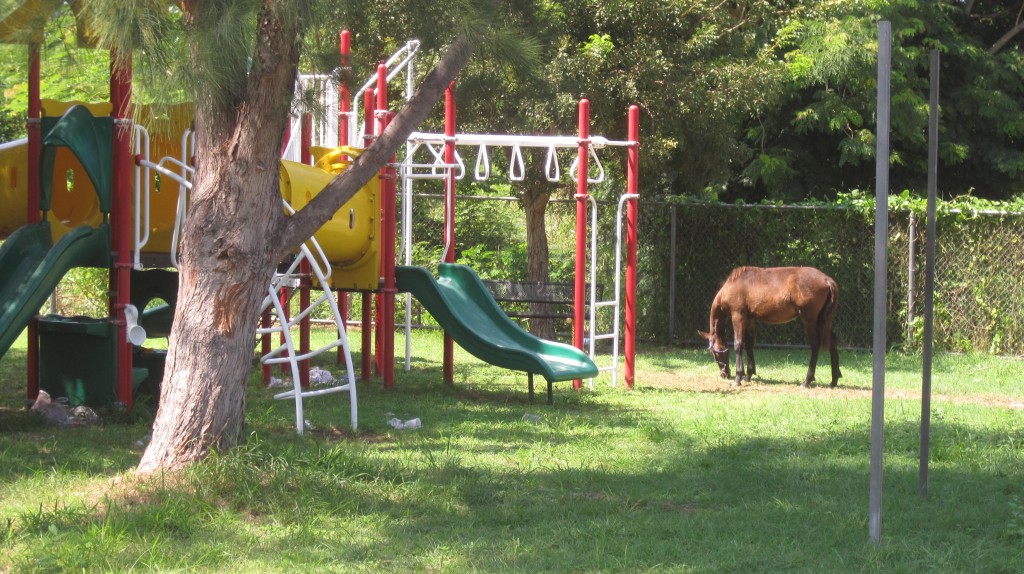
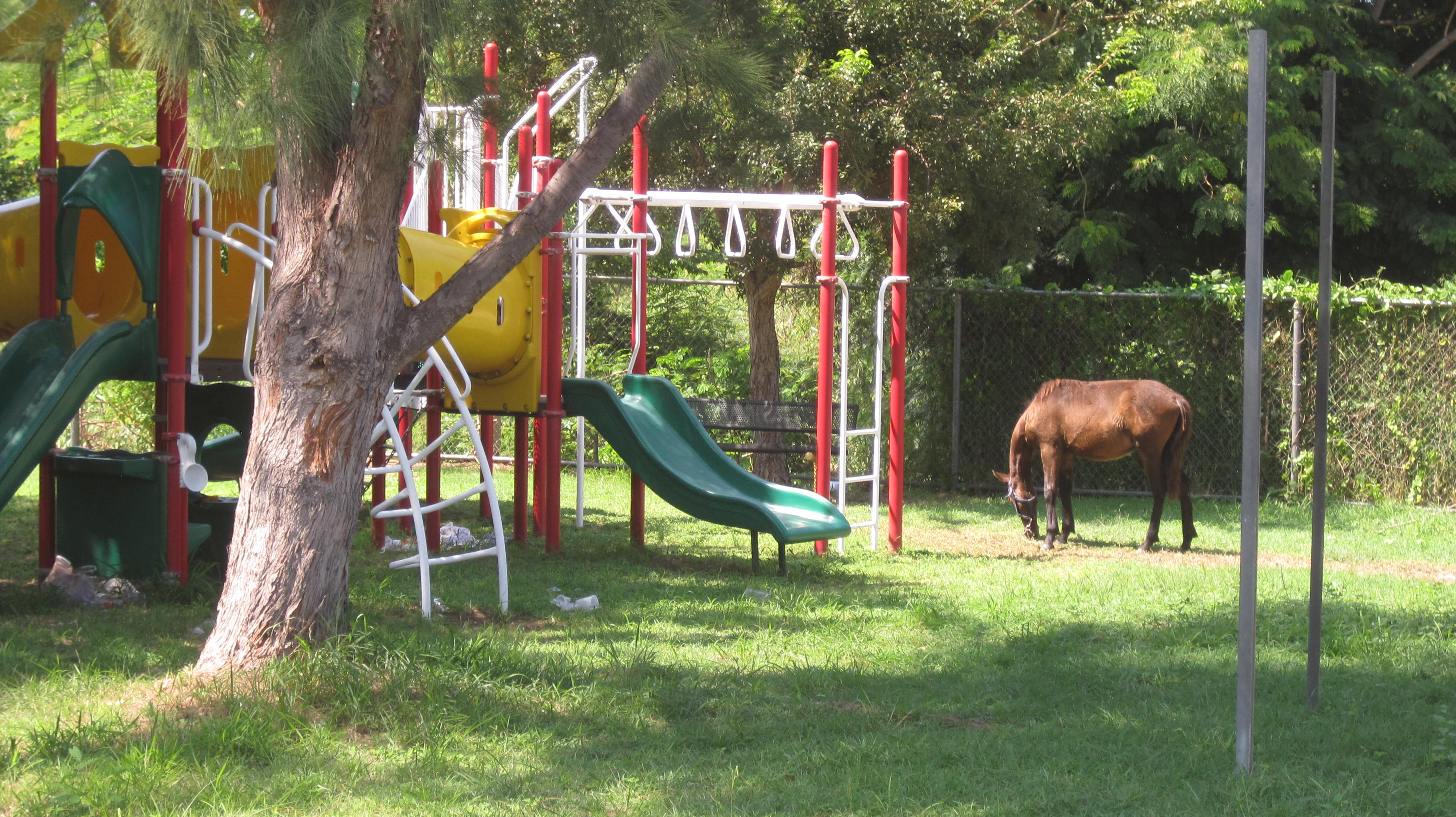
Playground and a horse
8) Setting – Of course there are palm trees and gorgeous beaches. But there are also some of the weirdest, funniest moments and scenes I have ever seen.

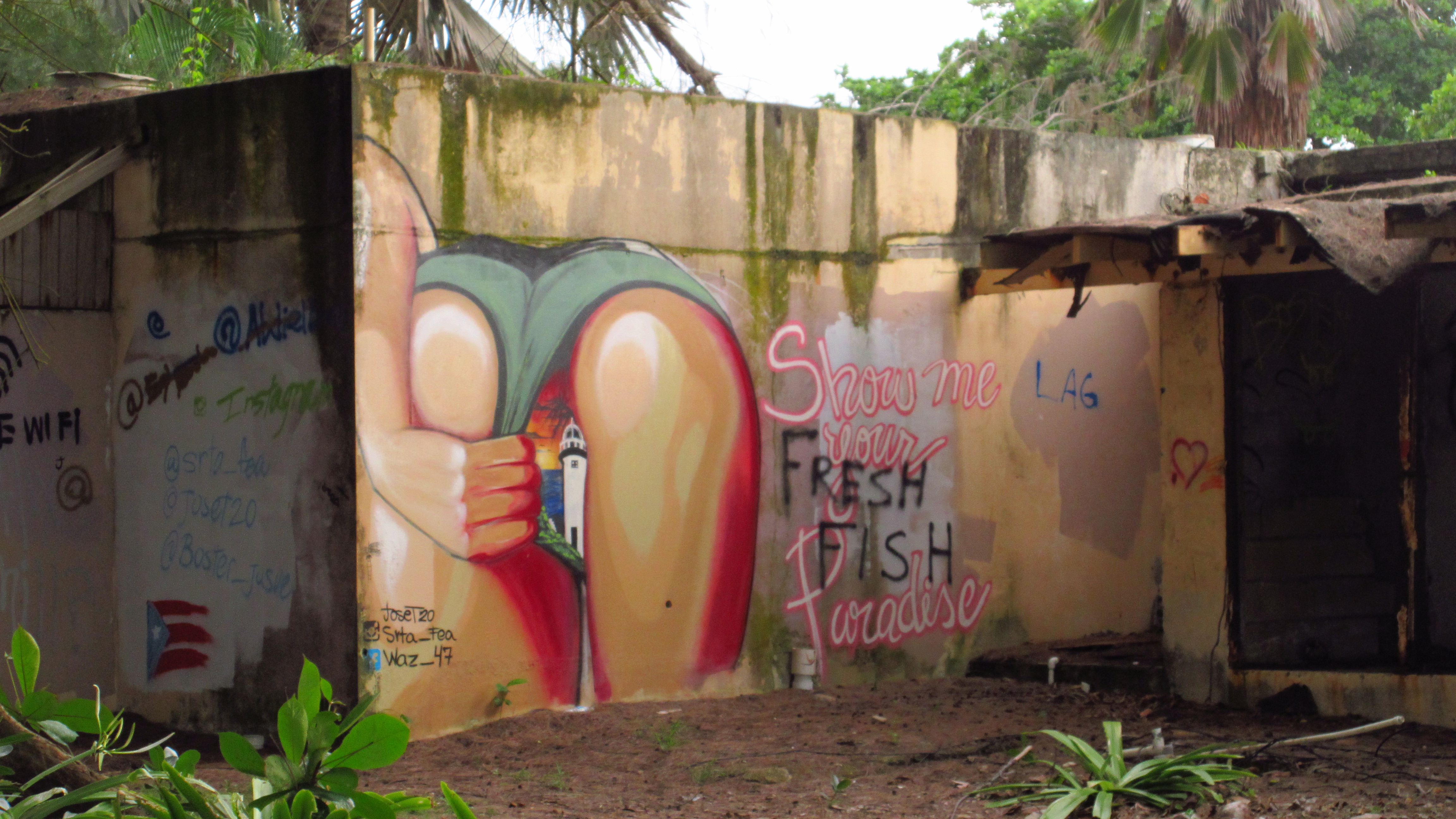
Show me your paradise
9) Utilities – From the word Utility. The quality or state of being useful. And utilities ARE very useful. But they are not ALWAYS consistent or on. Water, electricity, internet. They all go out much more often than many other places. This is another area you will get to work on that attitude change thing. As I write this we have been without water for about 3 days. We have a slow trickle from the remains of the line, but we are careful not to shower long or flush the toilet too much. We have gone weeks without internet. And nearly as long without electricity. Instead of thinking they SHOULD be on…I try to remember how great it is when they are and also how nice it is to go outside and enjoy the world without all these man-made systems for a few hours. Also, another opportunity to find out how much you can truly do for yourself. Most people have generators, water cisterns and know where the best hot spots for internet in town are for this very reason of not relying too much on any one system.
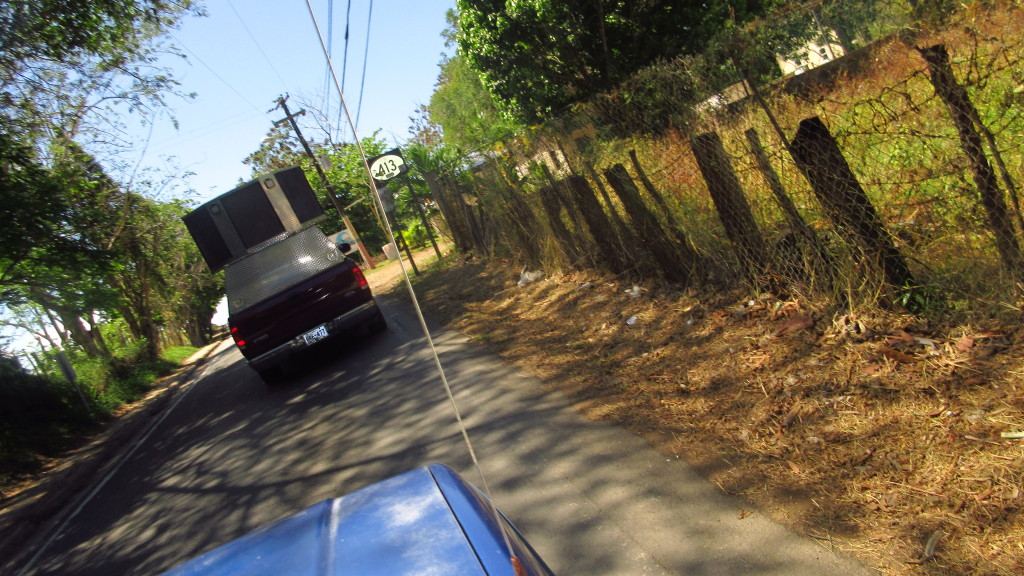
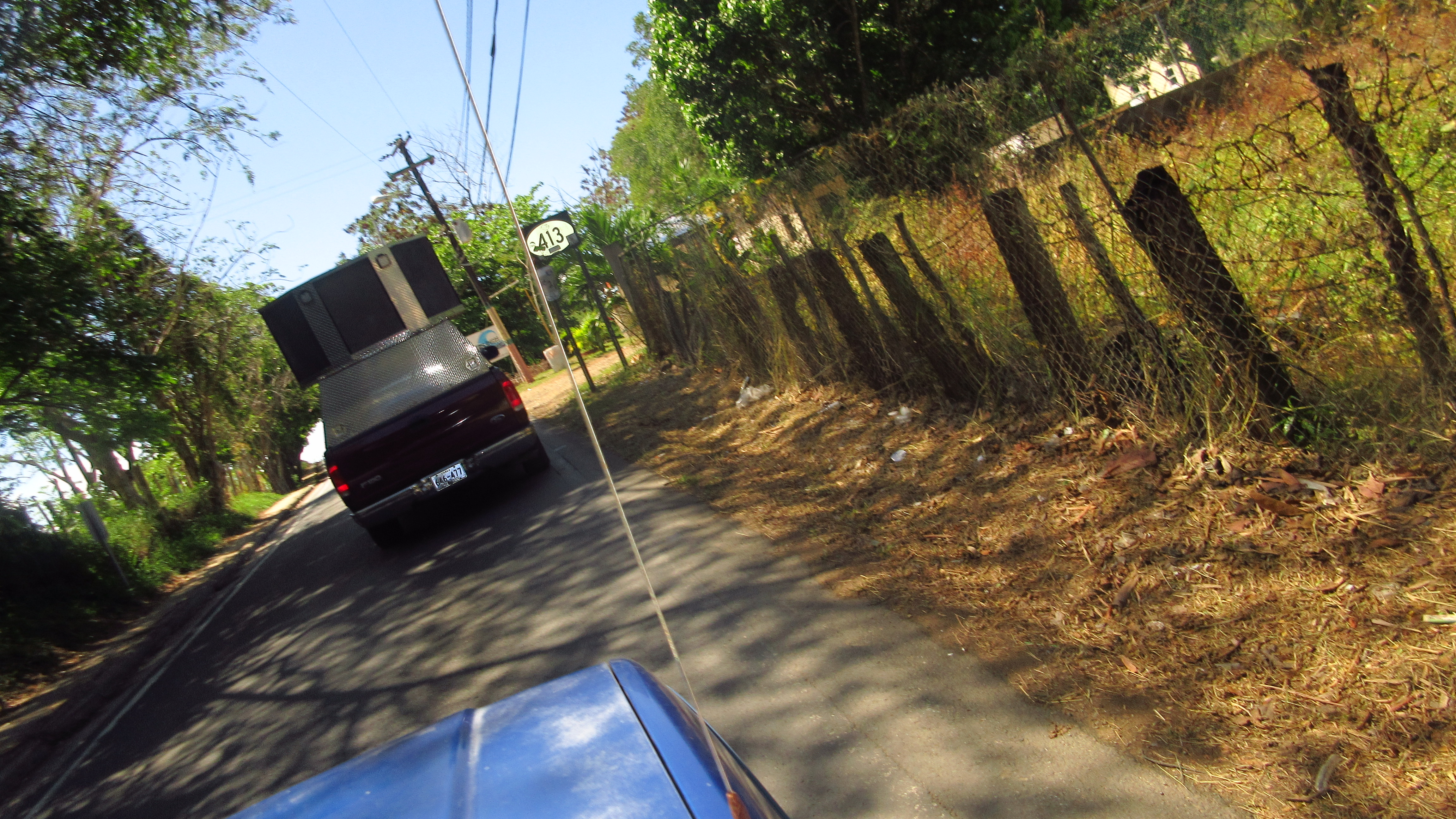
Speaker trucks…one way to annoyingly tell everyone about some news or product
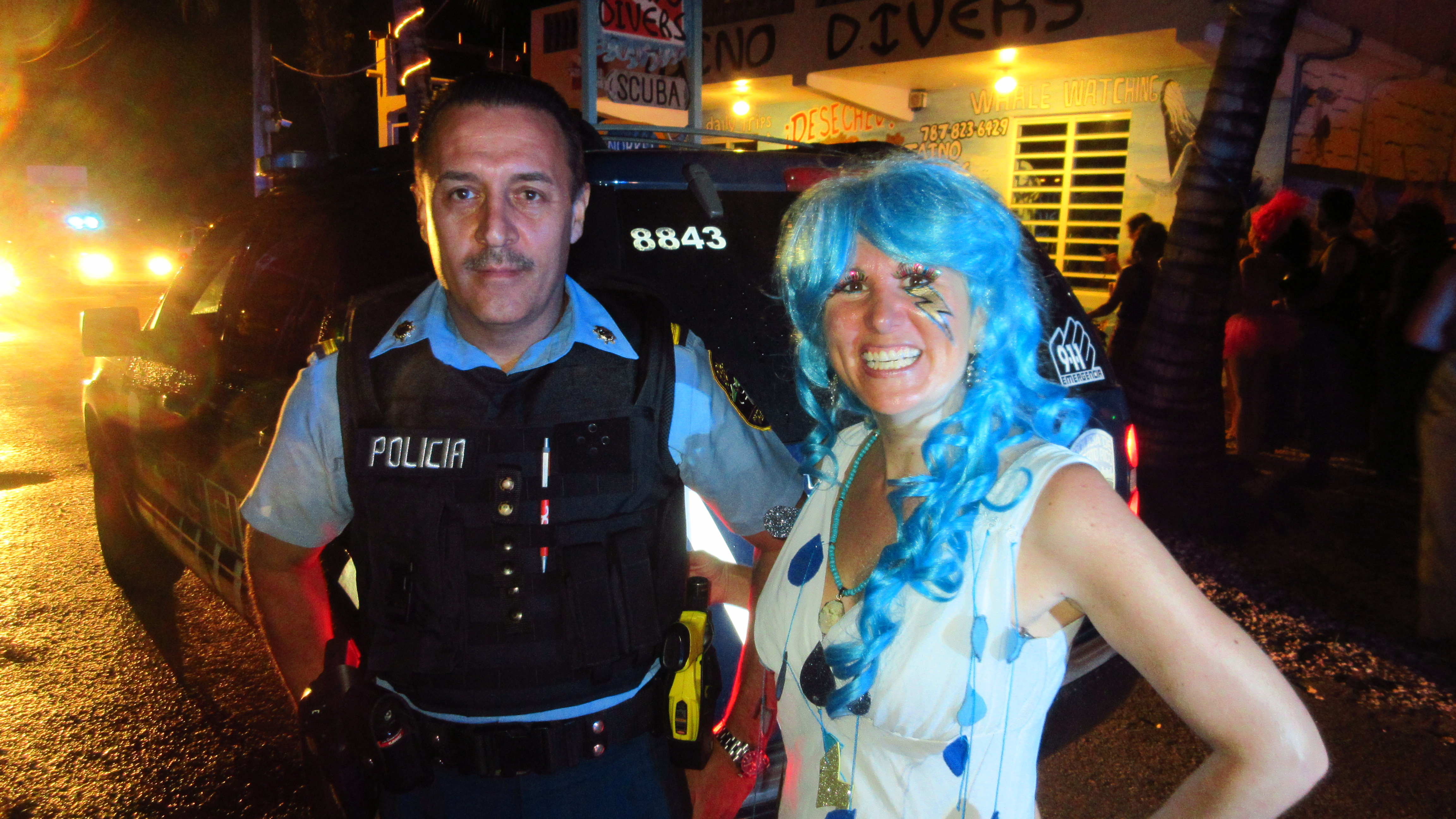
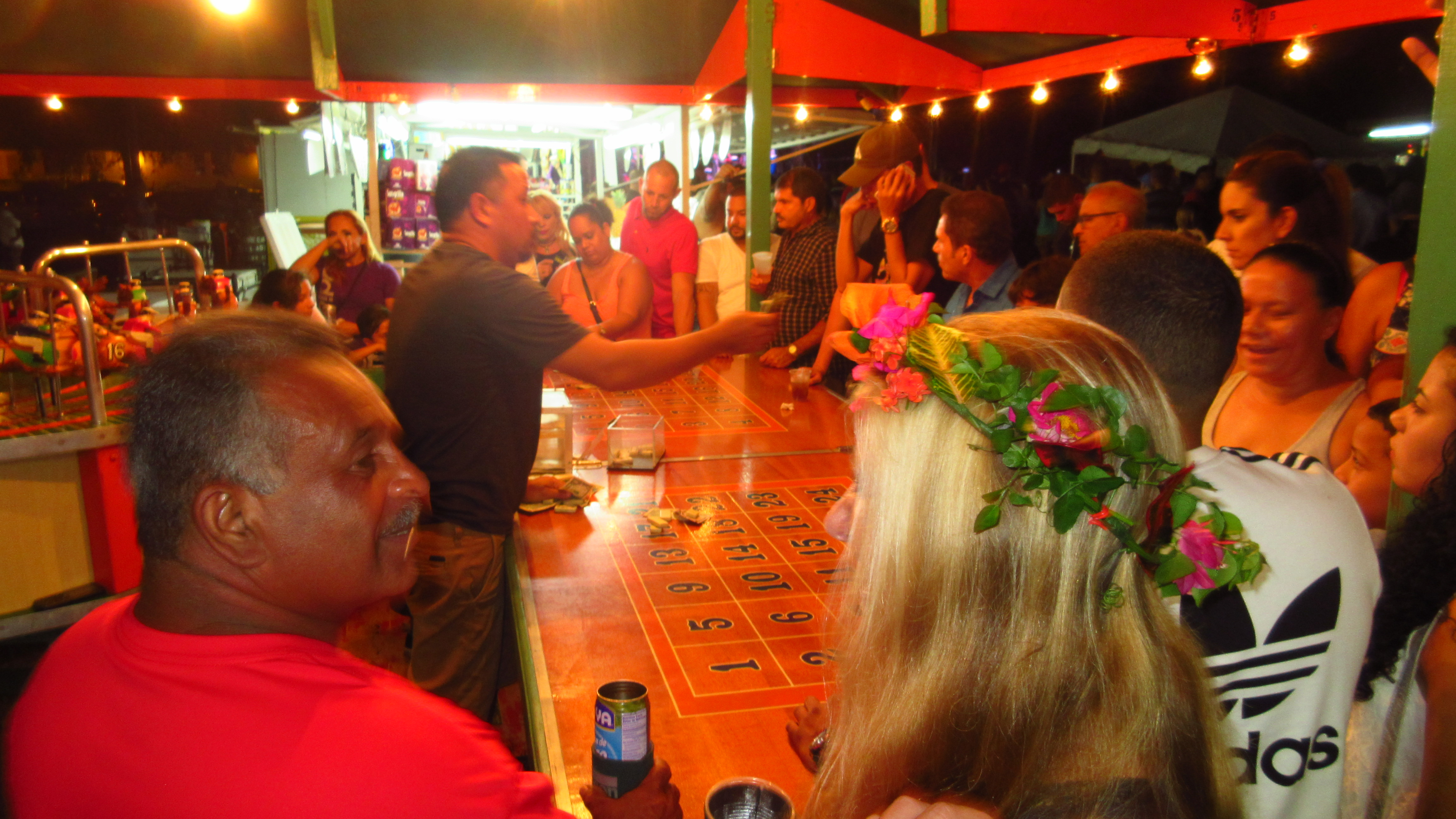
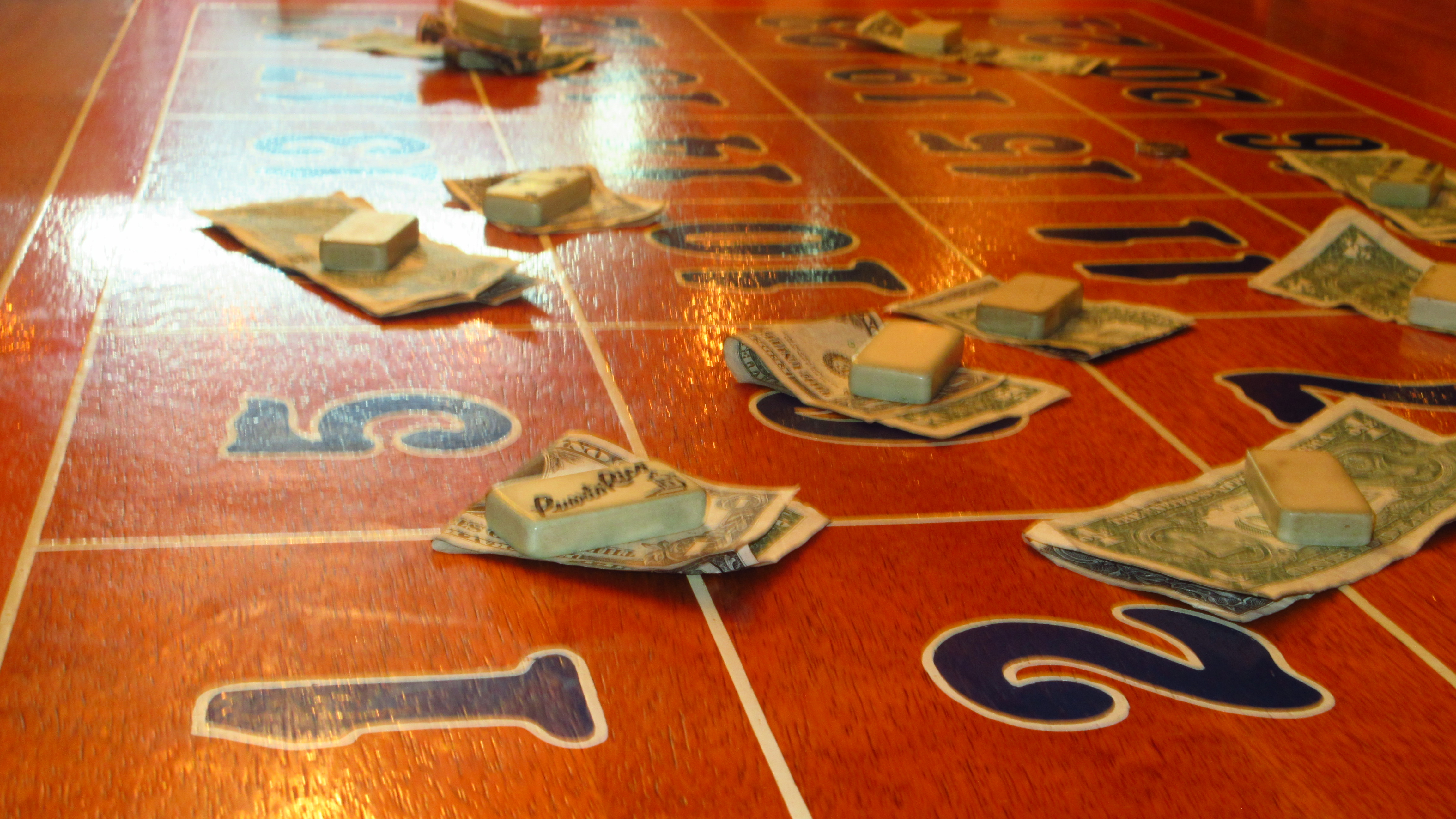
10) Freedom – You will not be nearly as coddled. You will be able to jump off slippery waterfalls and climb to hilltops and caves without helmets if you so wish. Police will likely look the other way at drunk driving. You will be able to have roosters and chickens (and goats and pigs and horses and…) in pretty much any neighborhood. You can host big gambling parties. You can sell stuff on the street. You can blast your music as loudly as you want. How you handle that responsibility of freedom will depend on you.
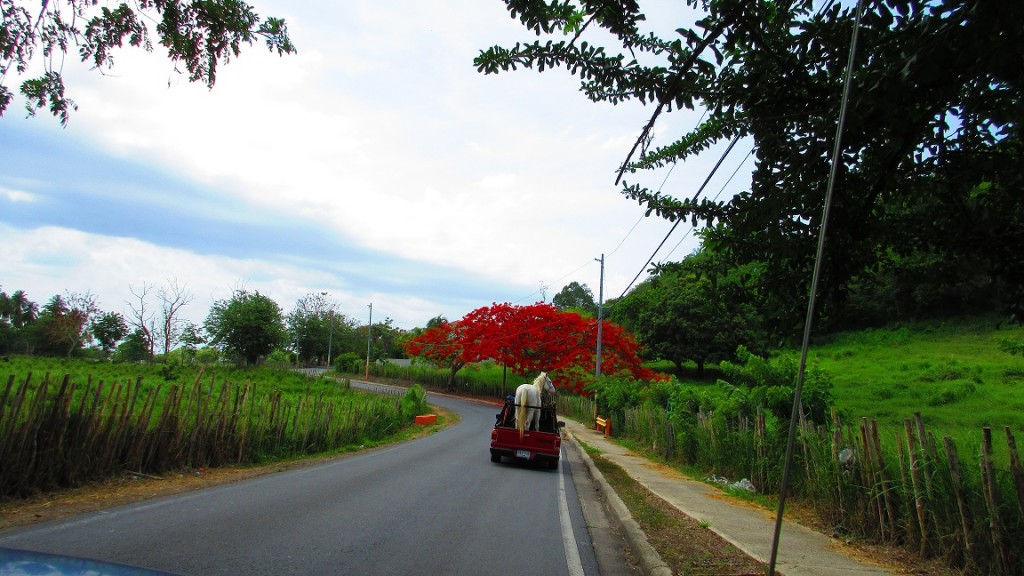
Flamboyan season -and a horse in a tiny truck
11) Seasons – This one seems to be a big one for some people. Like, “Don’t you miss the changing of the seasons?” For me, the only season I really enjoyed see change was the one that brought us out of the cold depressing dark winter/spring into full summer fun. Wasn’t that everyone’s favorite time? No school. Long days. Parties with friends. Hanging out outside. BBQs and nice weather. And so, I get to live in summer year round. And actually there are seasons here. They are just a little less pronounced and more to do with rain and fruit varieties (mango or avocado season for example) than with temperature. Also there are seasons of people at least in Rincón. Tourist season and off-season.
12) Your Attitude. (From Type A —> Type B): If you can make this change it will help you tremendously. If you can’t make this transition, this may not be the place for you. There are cockroaches here. There are rats here. There are mosquitoes.Things break more often and wear out faster. Things get dirtier and need to be cleaned more. There are poor people. It’s harder to find all the stuff you are used to. There are not as many jobs and definitely not as many high paying jobs. Things take longer than you are used to or think they should. We get it. But please…Take a chill pill. Go to the beach. Take off your watch. Listen to some music. Jangear con tus panas. Breathe in the moment. All of this is just part of the adventure. Have fun with it! Learn something! People who can’t adjust at least a little to Type B Island life will probably not enjoy Puerto Rico unless they completely isolate themselves from it.
13) Design of your life! With freedom, a can-do spirit and a laid back vibe you will probably begin to design the life of your dreams. You will be able to move from a wage slave beholden to someone else’s vision to the boss artist you have had locked away. With a lower cost of living you won’t need to make as much money to make that happen and you will be doing something you truly love and would do even if money wasn’t a factor. Often times in an informal under-the-table economy!
14) Language -Spanish! (Español) – You can get by, especially in certain areas like Gringolandia (Rincón, Aguadilla, most of the west coast, university areas, parts of San Juan, etc) speaking only English, but you certainly won’t have a very broad understanding of Puerto Rico and your social circle will be limited. Nearly everything is first in Spanish here. Puerto Rican Spanish specifically which is pretty different than other Spanish. Everything. From the TV to radio, to basic conversations with retailers to deep important conversations in government buildings. If that bothers you or can’t adjust at least a little to it, you may go crazy.
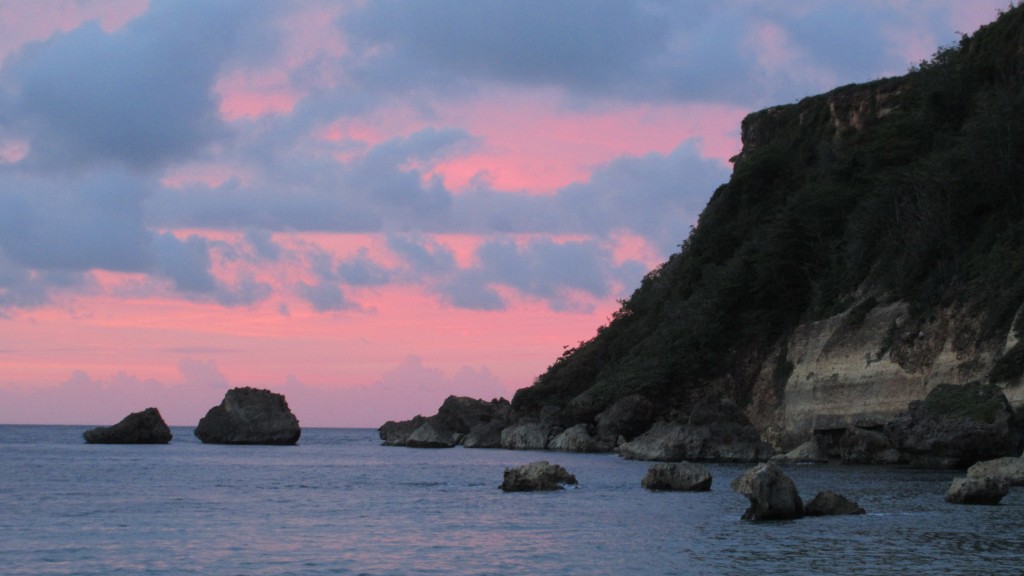
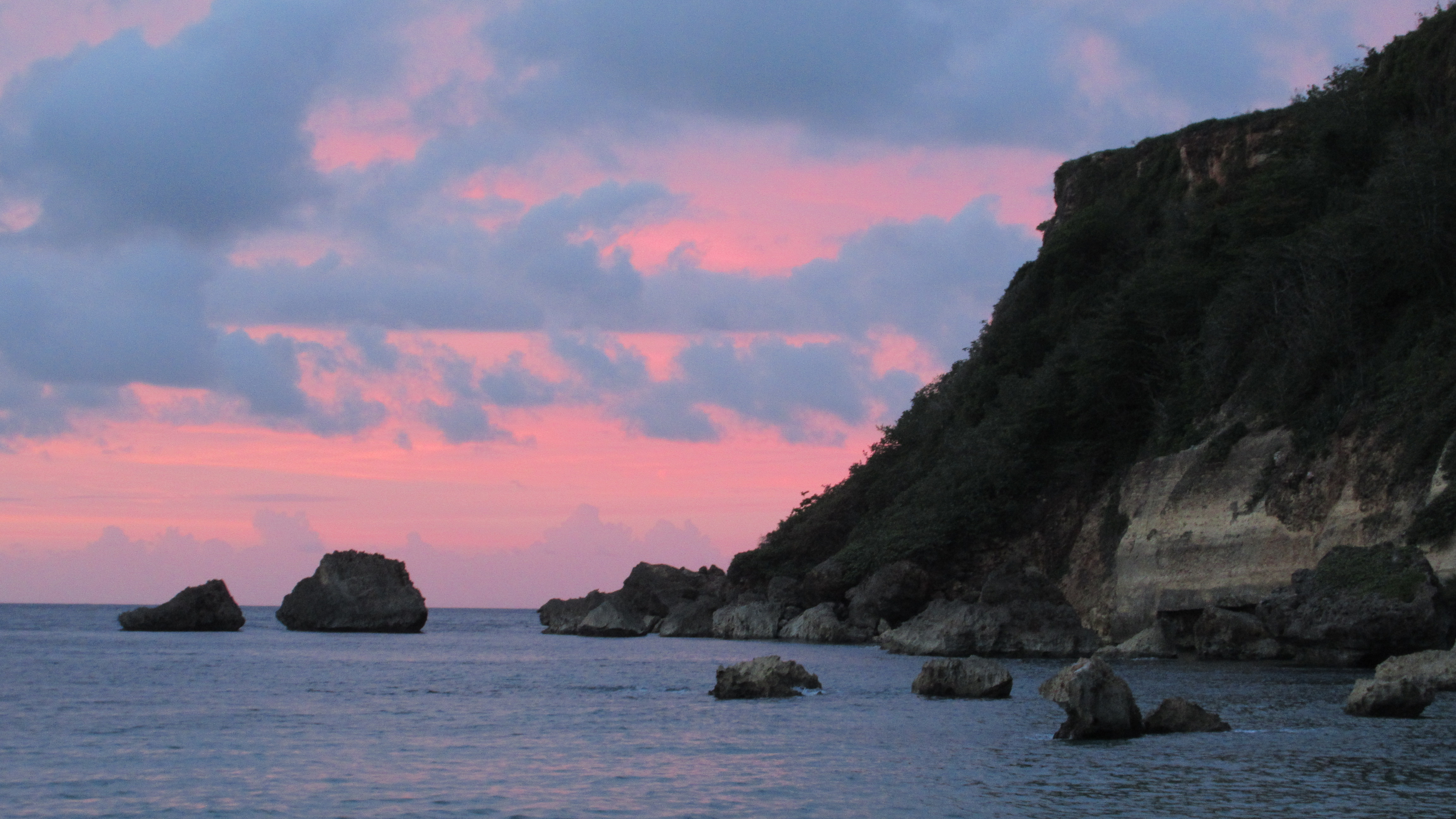
Borinquen Beach, Aguadilla
15) Tropics – This is the tropics. That means it is incredibly beautiful and post card perfect sometimes. We live where you vacation. But it also means that it can be pretty humid and hot. It means there are creatures and plants you are not used to. There are big spiders and bigger cockroaches. There are weird sounds that you can’t identify especially at night. There are termite swarms after a big rain. And the rainstorms are big and thunderous. Aguaceros! You will probably break out in some sort of sweat or plant poison rash (like Puerto Rican poison ivy) or even tropical disease (like Dengue, Chikungunya, Zika), you may get sunburned because the sun is pretty intense. It’s also an island surround by sea. The sea is dangerous! People often underestimate the power of the ocean and there are always a few drownings every year!
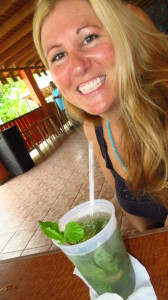
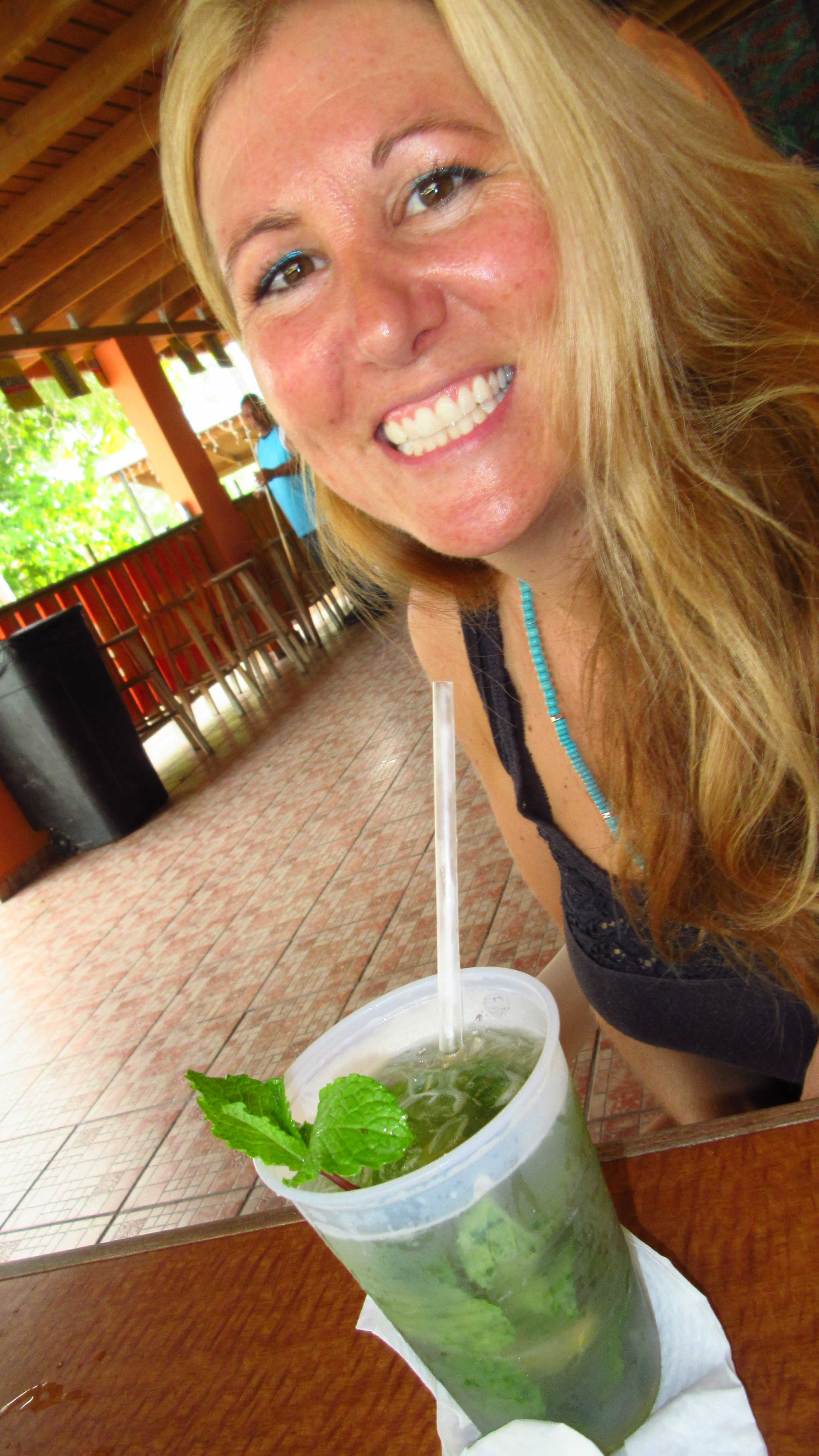
Mojito time!
16) Drinking – There is definitely a drinking culture here in Puerto Rico. Fueled by rum from the island (Bacardí, Don Q) as well as Medalla and other light beers. It would be a rare event or party without alcohol. It’s hot and a cold one tastes pretty damn good sometimes. Even customer appreciation events at banks, grocery stores, parades at all hours of the day etc are fueled with alcohol. Chinchorreos, cabalgatas, parrandas are all reasons to drink more. With that is a lot more acceptance of alcoholism and its consequences. You will probably have to watch your drinking a lot more as it can easily creep up on you.
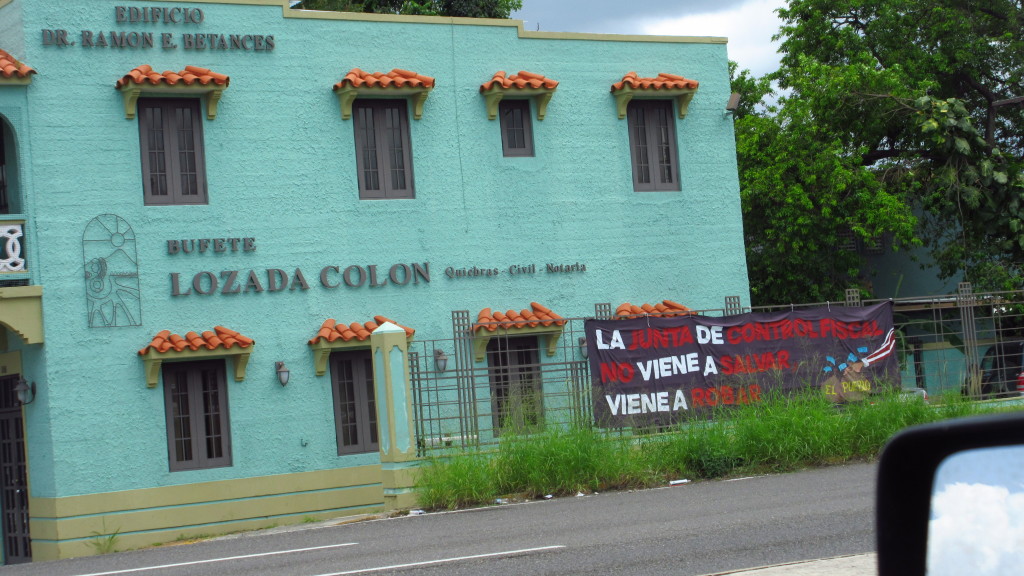
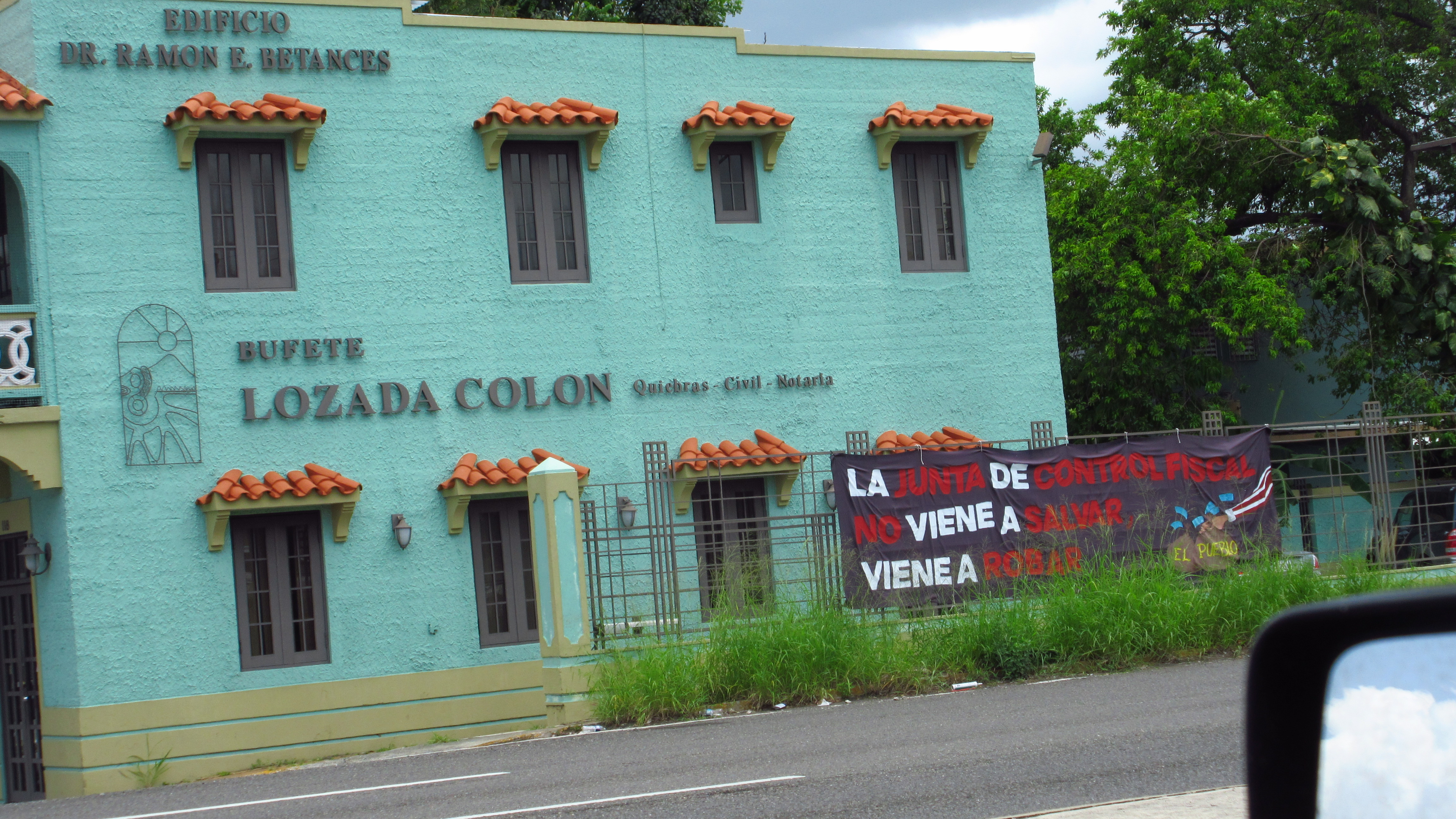
La Junta de Control Fiscal No Viene a Salvar, Viene a Robar (The Control Board isn’t coming to save us, it’s coming to rob us)
17) Life in a Colony– If you move to Puerto Rico you will probably be struck by both the similarities and the differences from life where you came from. Puerto Rico has nearly everything you would expect in a state of the United States of America. Except one big thing: Self-sovereignty. Puerto Rico functions as a territory but is basically treated as a colony of the US. As a resident here, you will see what it means to be basically at best sort of forgotten and at worst downright pillaged of resources. We lack the right to vote for president and many of the decisions for the island can be over-ruled by US congress. And we have no voting members there either. It makes it much harder to address island wide issues when there is no representation and very little interest on the part of the US besides financial and military.
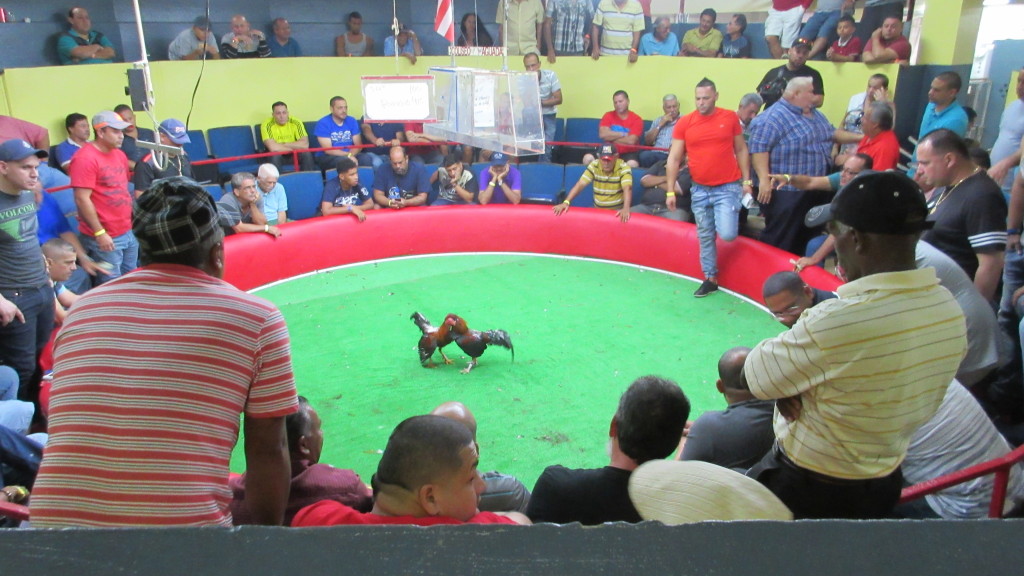
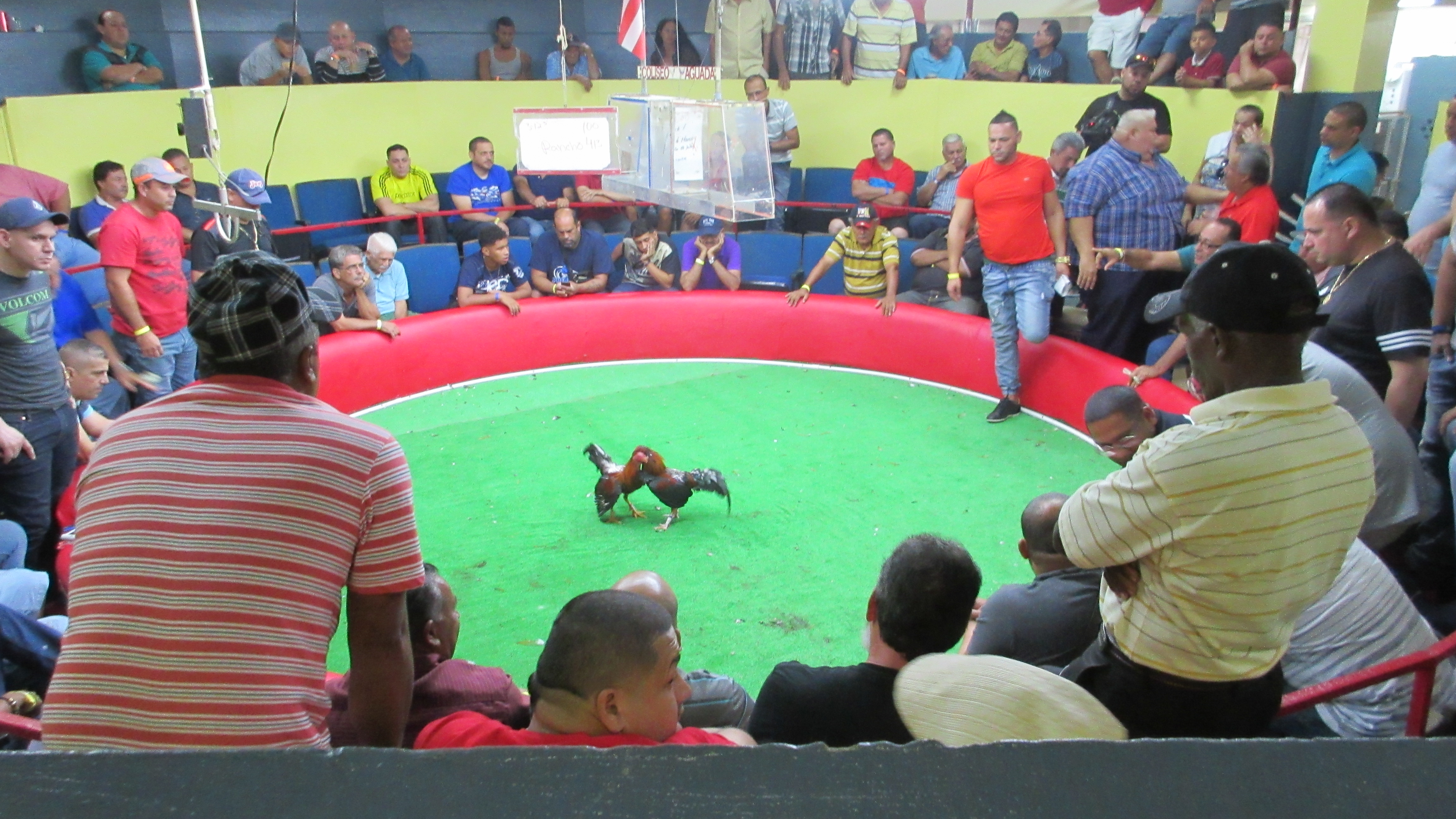
Cockfighting is legal and thriving all over the island
18) Overall a big culture change – Some of these are mentioned above, but suffice it to say that you will probably be in for a culture change if not shock. Puerto Rican culture is a distinct blend of Latino Spanish influence and history, afro-Caribbean roots and the effects of being part of the US. While it is difficult to generalize, I think it is fair to say that nearly everything you know culturally is just a little bit different in Puerto Rico. Views on time (hora Puertorriqueña), values of work/family (WAY more days off to “compartir” with loved ones), religion (mostly Catholic with a healthy dose of Pentacostal), food (mmm yum), language (a distinct type of Spanish), recreation (some things are the same but there are new ones here like cockfighting, surfing and coffee festivals that we never experienced before) , history (you should know the names of historical figures like Pedro Albizu Campos, Luis Muñoz Marin and Doña Fela), expressions (many funny common expressions here), social interactions (like kisses on the cheek or saying Buen Provecho), music (salsa, merengue, bachata, reggaeton and more), taboos, and much more are all going to be different in your new life in Puerto Rico.
I know this list isn’t comprehensive, but hopefully helps give you an idea of what sort of lifestyle change you are actually looking into if you move to Puerto Rico. For us, we love it and it suits our personality, but it may not be for everyone. Come and visit before you move. And if you’re anything like us, you will probably be bedazzled by the Isle of Enchantment.